


How Much Does Garage Concrete Leveling Cost in Cypress, TX?

AI Generated Image, may not be an accurate representation of our product or service
When homeowners in Cypress, TX, and the surrounding Greater Houston area notice their garage floors sinking, cracking, or pulling away from the walls, the immediate question on their minds is usually: How much does garage concrete leveling cost in Cypress, TX? Generally speaking, professional garage concrete leveling using modern polyurethane foam injection is significantly more affordable than total slab replacement, often costing a fraction of the price while providing a permanent, stable fix. Pro Concrete Leveling of Houston helps property owners throughout Houston, TX, Katy, TX, The Woodlands, TX, and Cypress, TX restore their sunken garage slabs quickly and efficiently.
Understanding the costs associated with repairing a sinking garage floor involves looking at several unique factors, including the size of the slab, the severity of the settlement, and the advanced materials used to lift the concrete back to its original grade. Rather than dealing with the massive expense, demolition mess, and prolonged downtime of tearing out the old concrete, local residents are turning to advanced foam lifting solutions.
Understanding Garage Concrete Settlement in Cypress, TX
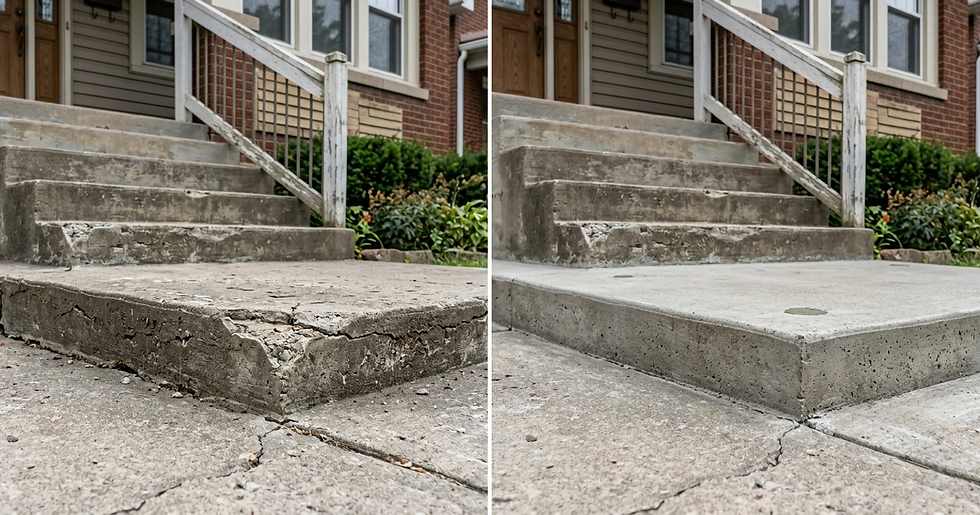
The soil conditions in Cypress, TX, and nearby communities like Tomball, TX, and Katy, TX, present unique challenges for concrete structures. Expansive clay soils swell when they absorb moisture during heavy rainfalls and shrink dramatically during hot, dry summer months. This constant movement creates voids beneath heavy garage slabs, especially as vehicles park on them day after day. Over time, the sub-base gives way, leading to sunken sections, tripping hazards, and unsightly cracks.
When settlement occurs, minor surface flaws can quickly escalate into structural worries. While some homeowners look into cosmetic fixes, the root cause is almost always soil compaction and void creation beneath the slab. Addressing this requires lifting the entire slab back into place, a specialty covered extensively under our Residential Concrete Leveling services.
Factors Influencing Garage Concrete Leveling Costs
Because every garage floor is different, providing a single flat rate is challenging. Several key elements dictate the final cost of a concrete lifting project:
Square Footage: Larger multi-car garages require more material and time to lift evenly than a standard single-car garage slab.
Degree of Settlement: Slabs that have sunk several inches require more polyurethane foam material to fill the large subterranean voids and achieve a complete lift.
Accessibility: Ease of access to the garage for specialized injection equipment can influence project efficiency.
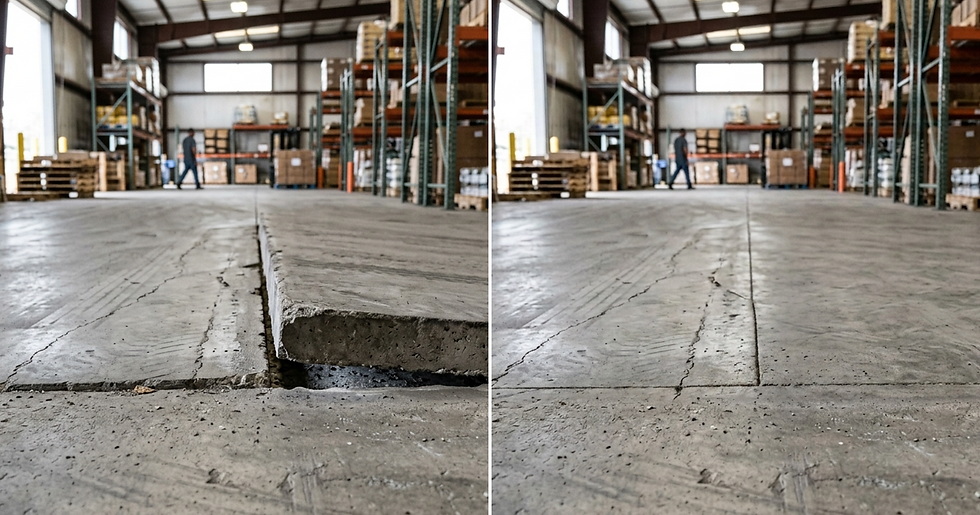
Commercial vs. Residential: While residential garages are straightforward, commercial facilities and warehouses often require Commercial Concrete Leveling to handle heavy industrial loads and high-frequency forklift traffic.
Why Polyurethane Foam Injection is the Cost-Effective Choice
Traditional mudjacking used heavy cement slurries that added extra weight to already failing soils, often leading to secondary settlement. In contrast, modern techniques utilize high-density expanding polymers. Homeowners and contractors frequently look to advanced resources like Polyfoam Injection Concrete Raising & Leveling to understand how state-of-the-art foam works.
Polyurethane foam injection works by drilling penny-sized holes into the sunken garage floor and injecting a specialized, expanding polymer into the voids below. The foam expands rapidly, expelling moisture, compacting the loose sub-base, and lifting the concrete slab precisely back to level. This method cures within minutes, allowing you to park your vehicles on the garage floor almost immediately after the service is completed.
Comparing Cost: Repair vs. Replacement
When faced with a sunken or uneven garage floor, property owners generally weigh two options: repair via foam leveling or complete demolition and replacement. Total replacement involves breaking up the old concrete, hauling away heavy debris, regrading the soil, and pouring a brand-new slab. This process can take days or even weeks, rendering your garage unusable and tearing up your landscaping.
Foam leveling, on the other hand, is completed in just a few hours with zero messy demolition. Because it saves heavily on labor, heavy machinery, and disposal fees, it costs a fraction of replacement costs. This makes it the preferred method for homeowners from Spring, TX, to Sugar Land, TX, and Pearland, TX.
Frequently Asked Questions About Garage Concrete Leveling
How long does the garage leveling process take?
Most residential garage lifting projects are completed in just two to four hours. Because the polyurethane foam cures completely within 15 minutes of injection, you can use your garage immediately afterward.
Will the injection holes be noticeable?
The drill holes used for the foam injection are very small—about the size of a penny. Technicians patch these holes with a high-strength concrete mixture that blends seamlessly with your existing garage floor.
Can foam leveling fix cracked garage concrete?
While foam leveling successfully lifts and stabilizes the slab to close gaps and eliminate uneven steps, it is designed primarily for lifting and structural stabilization rather than cosmetic surface restoration.
Is foam concrete leveling environmentally safe?
Yes. The high-density polyurethane foam used is inert, moisture-resistant, and environmentally safe. It will not degrade, leach chemicals into the ground, or shrink over time.
Schedule Your Consultation Today
If you are dealing with a sunken or uneven garage floor and want a permanent, cost-effective solution, trust the local experts. Pro Concrete Leveling of Houston proudly serves Cypress, TX, Houston, TX, Katy, TX, The Heights, Houston, TX, Conroe, TX, Magnolia, TX, Humble, TX, and surrounding regions. Contact Pro Concrete Leveling of Houston today to schedule your assessment and find out how affordable restoring your concrete can be.


Comments